

What is rPET?
Let's first define what PET is: polyethylene terephthalate, that is, it is a type of plastic widely used in beverage and textile containers (in the US it is known as Mylar and in the UK as Melinex ). Chemically, PET is a polymer obtained through a polycondensation reaction between terephthalic acid and ethylene glycol. It has the property of being a thermoplastic with a high degree of crystallinity, which is achieved by greater cooling of the processed material through extrusion, injection, blowing, which is how all the plastic items we know are mainly obtained, such as bottles, containers, utensils, etc.
It was first produced in 1941 and was patented as a polymer for making fibers to replace cotton from Egypt.

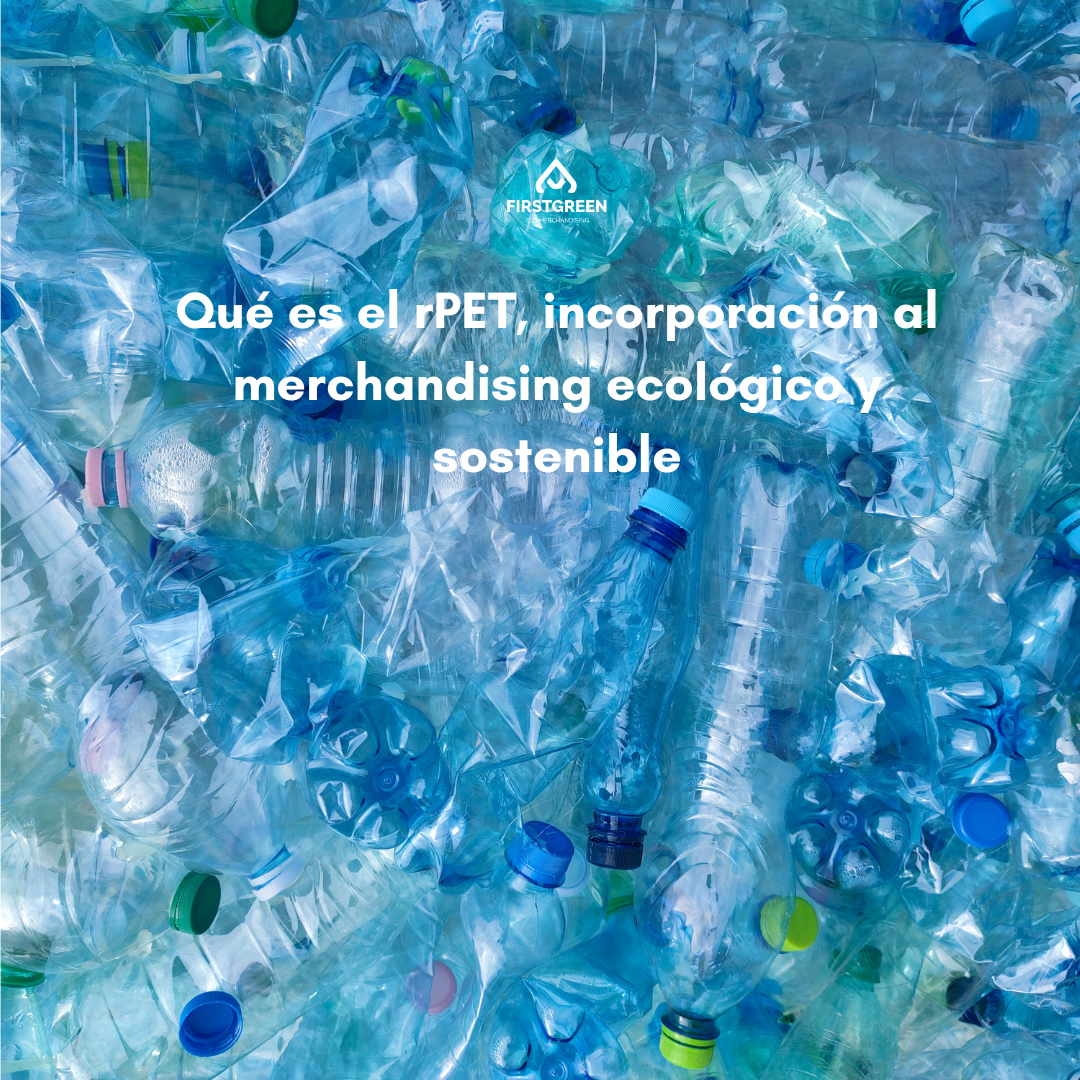
rPET is recycled PET, basically PET made from waste material. In 2014, more than 57% of PET bottles had already been recycled in one way or another.
The recycling process begins with each of us' awareness when we throw bottles into the trash in containers suitable for recycling.
Once in the processing plant, it goes through the following steps: collection, unpacking, classification, shredding, cleaning, grinding, metal/plastic/paper separator, washing, drying, metal detector and classification; where it is ready to return to the cycle of use for different purposes.
Demand and production capacity are increasing. European authorities have set a requirement for all PET bottles to contain at least 25% recycled content by 2025 .
The use of rPET is becoming more common every day and the promotional gift and merchandising industry is making great strides in its use. For example, bags, folders, t-shirts, jackets, caps, glasses, lanyards, etc. We invite you to visit our exclusive rPET collection from FirstGreen.

rPET has a number of advantages over other components such as bricks. By using this type of product we help to significantly reduce waste in landfills, reduce the demand for petroleum, and generate less CO2 in the manufacturing process compared to other processes. Companies can reduce their carbon footprint by up to 16%, reduce sulphur dioxide emissions by 20% and phosphates by 45%. In short, the use of rPET promotes the circular economy and sustainability.
The UN has estimated that 400 million tons of plastic are generated worldwide. Of this amount, only 9% is used. Do you know where the rest is? YES, in the seas and other ecosystems.
At FIRSTGREEN we encourage you to use promotional gifts made with rPET. It is an ADDED VALUE to your brand image that users increasingly value.
Do you agree?

